
- posted: Mar. 15, 2026
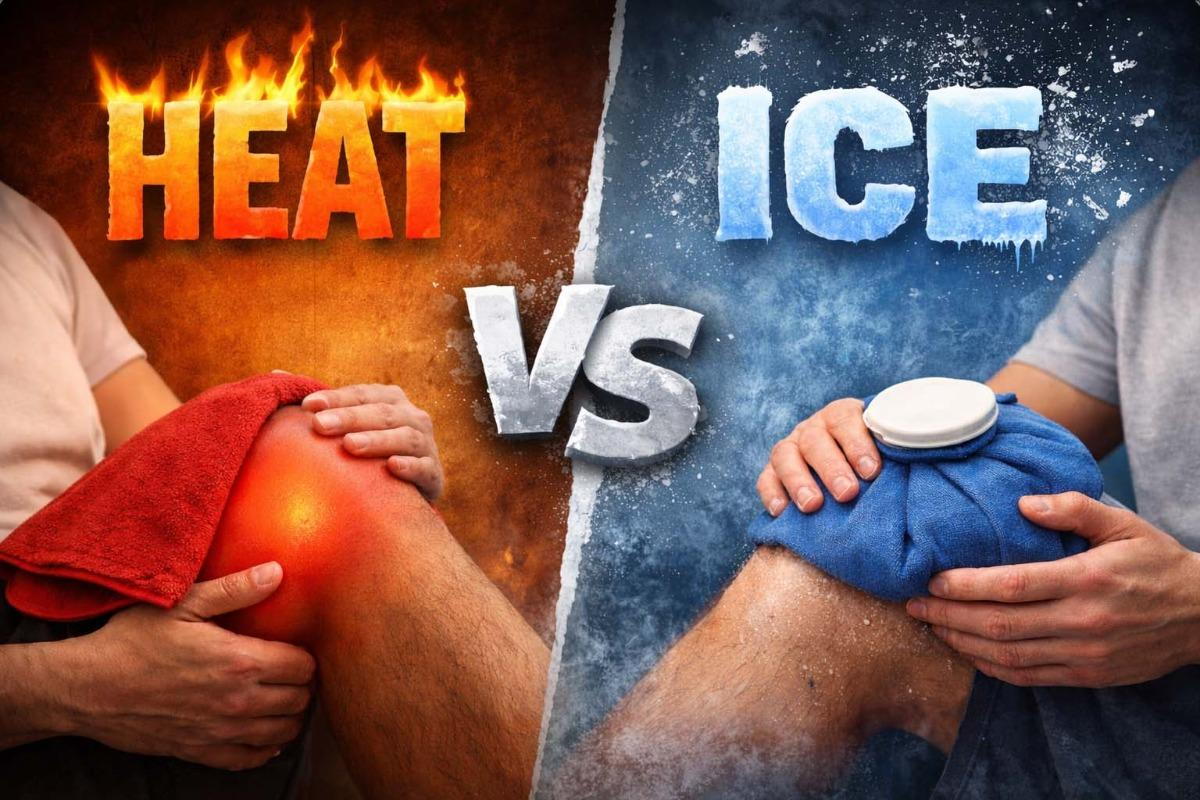
The debate about heat and cold therapy is ever going and ever changing. “Which one should I use?” is a question I get almost every day. The research is split for several conditions, but the mechanisms of each remain clear.
Ice restricts blood vessels, slows inflammation and offers quick pain relief by numbing the area.
Heat opens blood vessels, relaxes muscles and tissues, and improves flexibility and mobility in the area.
So which one do you use, and when?
Understanding Inflammation After an Injury
Inflammation was once thought to be harmful and something that should be eliminated as soon as possible. It is now clear and understood that immediate inflammation following a joint, ligament, or soft tissue injury is necessary for healing. This is how the healing products flood the affected area and begin their work.
Although it remains common to ice an injury during this phase, it may not always be the best method long term. Heat is not recommended during the acute phase (24–48 hours post injury), and ice should only be used if the pain is debilitating and prevents rest, necessary movement, and recovery.
After a few days, once movement, rehabilitation, and exercises are resumed, the affected area may flare when challenged. Ice therapy after this can be helpful to reduce pain and swelling. At this stage, the swelling is no longer as necessary since the flare-up is part of rehabilitation and expected as new ranges of motion are challenged.
Arthritis
If the pain is arthritic in nature, heat is usually best. The most comforting option is a warm, moist towel or heat pack applied to the painful area. This helps improve blood flow to the area and can increase circulation and mobility in the joint.
Delayed Onset Muscle Soreness (DOMS)
Delayed onset muscle soreness is the pain people feel 1–3 days after a heavy workout. The research on relief is somewhat split.
According to the Journal of Rehabilitative Medicine, using heat for the first 24 hours after exercise, followed by ice afterward, can be effective in reducing DOMS.
Nerve Pain
Heat tends to be a better option for nerve pain, though it is not therapeutic and does not change the underlying cause of the nerve irritation. Heat can reduce surrounding muscle tension and promote relaxation of the affected tissues.
Further treatment is recommended if symptoms worsen or begin affecting other areas of the body, such as symptoms traveling down your arm or leg toward your hand or foot.
Joint Pain
Heat is generally more effective at reducing pain and stiffness in joints, especially when the pain is arthritic in nature. However, if the pain is post-surgical or there is visible swelling where the healing mechanisms are no longer needed, ice may be the better choice.
The Journal of Pain Resolution suggests that heat therapy provides relief for conditions such as chronic degenerative disc disease, non-specific low back pain with muscle spasm or contracture, postural and overuse myalgia, and osteoarthritis, excluding the inflammatory phase.
General Rule of Thumb

Ice is best for:
Severe recent injuries
Post-surgical swelling or pain
Irritations or flare-ups
Situations where you want to numb an area or reduce swelling
Heat is best for:
Muscle tension or stiffness
Loss of mobility
Tight or overworked muscles
Timing Guidelines
Heat can be used for up to 30 minutes at a time. Moist heat (packs, towels, etc.) tends to penetrate further into soft tissues and joints than dry heat such as a heating pad.
Ice can be applied for 10–15 minutes at a time, since our skin becomes cold and numb and we may not notice if frostbite is beginning. Always place a barrier such as a towel or cloth between your skin and the source of heat or ice.
A Practical Approach
What has worked best in my practice for people suffering from muscle injury is a simple sequence:
Heat the area for 15–30 minutes, stretch or mobilize the muscles, then ice the area for 10–15 minutes.
If you’re not sure which therapy (ice, heat,or stretches) is best for your condition, call Wilke Chiropractic for some ideas and guidance.
Contact Us
Office Hours
FLEXIBLE HOURS
We have flexible hours to fit your needs.
Phone: (630) 723-8983
Email: [email protected]
Location
Find us on the map
Wilke Chiropractic
2075 Blackberry Drive B
Geneva, IL 60134, United States
