
- posted: Dec. 16, 2025
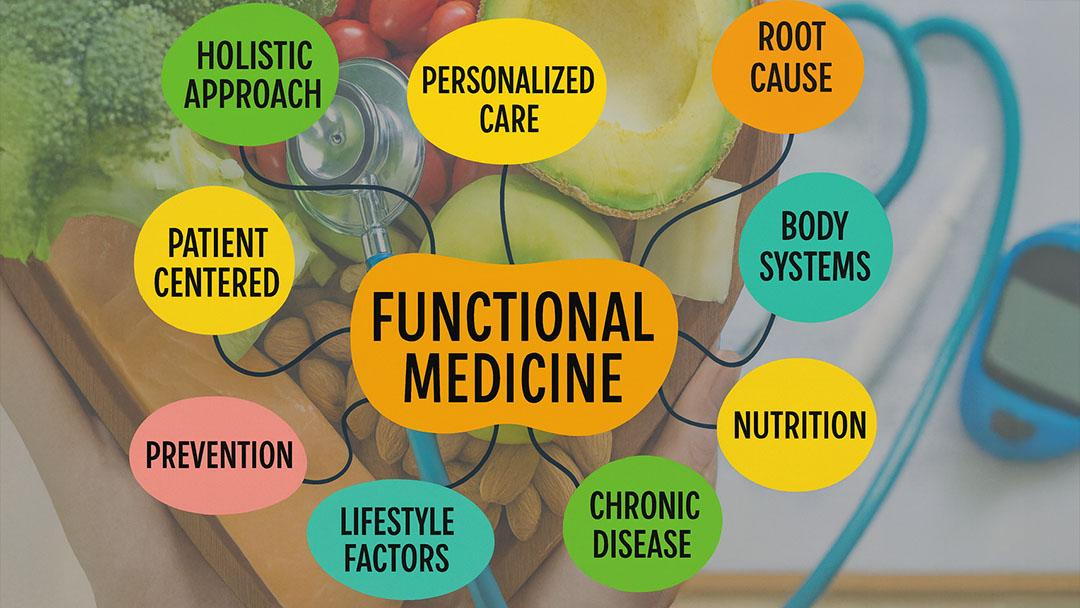
Functional Medicine (FM) is an evolution in the practice of medicine that better addresses the healthcare needs of the 21st century. It shifts the traditional disease-centered focus of medical practice to a more patient-centered approach.
What is Functional Medicine?
At its core, Functional Medicine is a science-based, personalized approach to health and healing. Unlike conventional medicine, which often focuses on suppressing symptoms with pharmaceuticals (e.g., prescribing a drug for high blood pressure), FM seeks to identify and address the root causes of disease.
Functional Medicine practitioners spend time with their patients, listening to their histories and looking at the interactions among genetic, environmental, and lifestyle factors that can influence long-term health and complex, chronic disease.
The Core Principles of Functional Medicine
Functional Medicine is guided by six foundational principles:
1. Patient-Centered Care
The focus is on the individual patient, not the disease. The practitioner partners with the patient to create a personalized healing journey.
2. An Integrative, Science-Based Approach
FM integrates the latest in genetic science, systems biology, and understanding of how environment and lifestyle influence gene expression.
3. Seeking the Root Cause
The central question is "Why?" instead of "What drug do I take?" A symptom like fatigue or joint pain is viewed as a sign that a deeper biological system is out of balance. FM uses advanced diagnostic testing to uncover underlying issues like nutritional deficiencies, chronic infections, toxins, and hormonal imbalances.
4. Recognition of the Body's Innate Ability to Self-Regulate
The human body possesses a remarkable capacity for balance and healing. Functional Medicine interventions are designed to remove obstacles to healing and support the body's natural restorative processes.
5. Focus on the Dynamic Balance of Internal and External Factors
Health is a constantly changing interaction between internal factors (mind, body, spirit, genetics) and external factors (physical and social environment, diet, stress).
6. Health as Positive Vitality
Functional Medicine is not just about the absence of disease; it's about achieving a state of vibrant health, high energy, and optimal function.
How is Functional Medicine Different from Conventional Medicine?
Feature | Conventional Medicine (CM) | Functional Medicine (FM) |
|---|---|---|
Focus | Disease or Symptom | Patient, Health, and Root Cause |
Approach | Standardized treatment protocols (one-size-fits-all) | Personalized treatment based on individual biochemistry |
Goal | Manage symptoms, acute care, disease diagnosis | Restore function, prevent disease, achieve optimal wellness |
Time with Patient | Often brief (10-15 minutes) | Extensive (initial visits can be 60-90 minutes) |
Diagnostic Tools | Standard labs focused on disease markers | Standard and advanced specialized testing (e.g., gut microbiome analysis, organic acid tests, detailed hormone panels) |
Treatment | Primarily prescription drugs, surgery | Diet, lifestyle changes, nutritional supplements, stress management, followed by pharmaceuticals only when necessary |
Conditions Functional Medicine Can Address
Because FM focuses on improving overall physiological function, it is highly effective for managing and often reversing chronic conditions, including:
Autoimmune Diseases: Rheumatoid arthritis, Hashimoto’s thyroiditis, Lupus
Digestive Issues: Irritable Bowel Syndrome (IBS), Inflammatory Bowel Disease (IBD), SIBO
Hormonal Imbalances: Thyroid disorders, adrenal dysfunction, PCOS
Metabolic Issues: Type 2 Diabetes, high cholesterol
Chronic Fatigue & Fibromyalgia
Mental Health: Depression, anxiety, brain fog
Getting Started with Functional Medicine
If you’re tired of simply managing symptoms and are ready to uncover the underlying causes of your health concerns, Functional Medicine may be the next step toward lasting wellness. This approach requires a commitment to understanding your body and making meaningful lifestyle changes — but the reward is true, sustainable healing.
If you’re curious whether Functional Medicine is right for you, we invite you to schedule a consultation with Dr. Wilke to learn more about this approach and how it can support your health goals. Taking the first step toward root-cause healing could be the beginning of a healthier, more energized you.
Contact Us
Office Hours
FLEXIBLE HOURS
We have flexible hours to fit your needs.
Phone: (630) 723-8983
Email: [email protected]
Location
Find us on the map
Wilke Chiropractic
2075 Blackberry Drive B
Geneva, IL 60134, United States
